Desserts
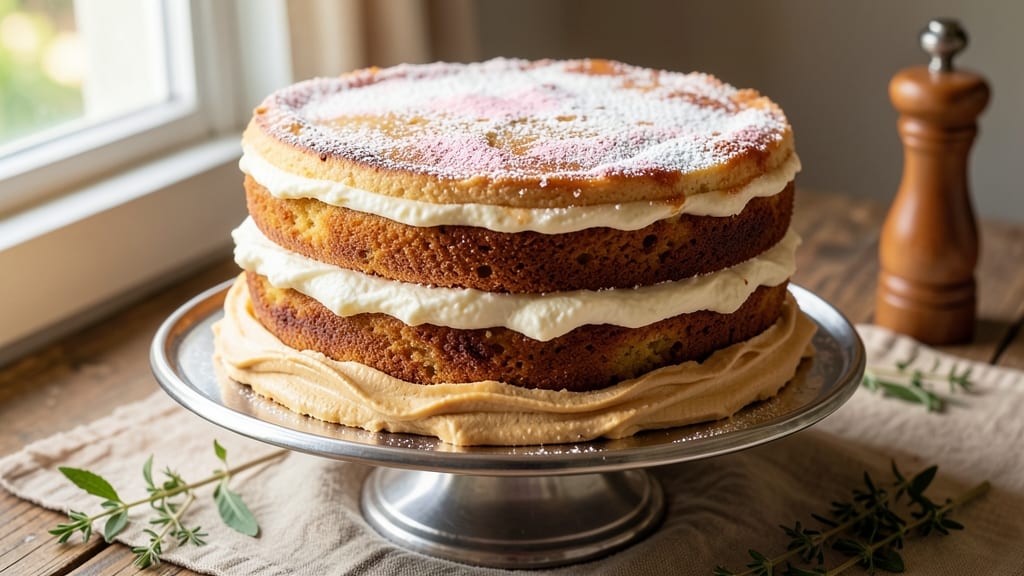
This almond flour butter cake delivers all the rich, tender crumb of classic vanilla cake—without a single grain of gluten or a hint of dryness. 💛 The secret lies in a precise blend of almond flour, eggs, and butter that creates a moist, velvety texture while keeping the structure light.
I've perfected this recipe after years of testing, ensuring every slice stays tender and never crumbly, even when sliced the day after baking.
The magic happens in the mixing technique: creaming the butter and sugar until light and fluffy, then gently folding in the almond flour to maintain air pockets.
A touch of xanthan gum (just ¼ teaspoon) binds the flour without adding bulk, while vanilla extract and a pinch of salt elevate the natural nutty flavor. This cake is naturally gluten-free, vegetarian, and requires no special equipment—just a standard cake pan and a few simple ingredients.
What you'll end up with is a golden, ultra-moist cake that holds its shape beautifully while melting in your mouth. The crumb is fine and tender, with just enough structure to slice neatly, and the flavor is richly buttery with a subtle almond sweetness.
It pairs perfectly with a dusting of powdered sugar, fresh berries, or a light lemon glaze for an elegant finish.
Serve warm with a cup of tea or coffee for a comforting treat, or enjoy it chilled as a special dessert. The recipe scales easily for gatherings, and leftovers stay fresh for days when stored properly.
Ready to bake a cake that's as impressive as it is delicious? Let's get started.
Ingredients for almond flour butter cake
Nine ingredients for a cake that’s velvety, golden, and utterly gluten-free—no dryness in sight.
| Ingredient | Amount | Notes |
|---|---|---|
| Unsalted Butter 🧈 | 1 cup | Softened but not melted |
| Granulated Sugar 🍚 | 1 ¼ cups | White or light brown |
| Large Eggs 🥚 | 3 whole | Room temperature |
| Almond Flour 🌰 | 2 ½ cups | Finely ground, blanched |
| Pure Vanilla Extract 🌿 | 1 tbsp | High-quality, pure |
| Xanthan Gum 🧪 | ¼ tsp | Essential for binding |
| Fine Sea Salt 🧂 | ½ tsp | Diamond Crystal preferred |
| All-Purpose Flour 🌾 | ¼ cup | For lightness (optional) |
| Powdered Sugar 🍚 | ¼ cup | For dusting (optional) |
| Unflavored Almond Milk 🥛 | ¼ cup | For extra moisture |
The almond flour is non-negotiable—Bob’s Red Mill or King Arthur are my go-tos for consistent texture. Grab the finest grind you can find; coarser flour will make the cake denser. Butter quality matters too—Plugrá or Land O’Lakes unsalted work perfectly. Eggs should be at room temperature to blend smoothly. For the vanilla, McCormick Pure Vanilla is reliable, but nothing beats a small bottle of Madagascar Bourbon if you’re splurging. Xanthan gum is available at baking supply stores or online—don’t skip it, even if it’s just a pinch.
No almond flour? Coconut flour at half the amount plus 2 extra tbsp almond milk works, but texture will differ. Short on eggs? Flax eggs (1 tbsp ground flaxseed + 3 tbsp water per egg) keep it vegetarian. The optional all-purpose flour adds lightness if your almond flour is extra-fine; omit if yours is standard. For dusting, Domino Clabber Girl powdered sugar is my go-to—it’s super fine and dissolves beautifully. If you’re avoiding dairy entirely, swap the butter for Earth Balance vegan butter (reduce by 1 tbsp to account for moisture differences).
Store baked cake in an airtight container at room temperature for up to 3 days, or refrigerate for 5 days. For longer storage, slice and freeze portions on parchment-lined trays, then transfer to a bag for up to 3 months. Reheat slices at 300°F for 5 minutes to restore freshness. The cake reheats beautifully—perfect for a quick dessert when you’re craving something warm. Leftovers? Toss them in a sandwich with jam for a decadent treat.
Why You'll Love This Recipe
- No Mixer Needed: I swear by this—just cream the butter and sugar by hand (or with a fork, if you're feeling rebellious). The almond flour does all the heavy lifting, so no overmixing, no dense crumb, just a tender crumb that falls apart like a dream.
- Buttery Vanilla Bliss: That first bite? Rich, buttery, and vanilla-forward without being cloying. The almond flour adds a subtle nutty depth, while the eggs keep it moist—no dry, crumbly disaster here. Honestly, it’s the kind of cake that makes you close your eyes.
- Weeknight or Wows: Slice it warm for breakfast (yes, really) or stack layers for a birthday cake that’ll fool everyone. The batter’s stable enough to bake ahead, so I’ve used it for potlucks, last-minute desserts, and even packed it for lunch—no one suspects the simplicity.
- Budget-Friendly Luxury: Almond flour might sound fancy, but a little goes a long way, and the rest of the ingredients are pantry staples. I’ve made this for under $3 a serving, and it tastes like a bakery’s priciest cake. (Between us, my kids don’t even notice it’s not store-bought.)
Step-by-step instructions for almond flour butter cake
This method delivers a perfectly moist, tender crumb that defies gluten-free expectations.
👨🍳 Step 1: Cream Butter and Sugar to Lighten the Texture
In a stand mixer fitted with the paddle attachment, beat the 1 cup unsalted butter and 1.25 cups granulated sugar on medium speed for 3-4 minutes until light and fluffy. You'll see the mixture nearly double in volume and become pale in color—this incorporates air that creates the cake's signature tenderness.
I press down on the butter mixture with a spatula occasionally to ensure it's fully combined. The butter should be softened but not melted—if it feels too soft, chill the bowl in the freezer for 10 minutes before continuing. This step is critical for achieving that perfect, moist crumb without gluten's binding properties.
👨🍳 Step 2: Add Eggs and Vanilla for Structure and Flavor
Add the 3 whole large eggs, one at a time, mixing on low speed for 30 seconds after each addition until fully incorporated. Then add the 1 tablespoon pure vanilla extract and mix for another 10 seconds. The mixture will look slightly curdled, but don't worry—this will resolve when you add the dry ingredients.
I like to use room-temperature eggs for better emulsification with the butter. If your eggs are straight from the fridge, let them sit in warm water for 5 minutes first. The vanilla should be high-quality pure extract, not imitation, to get that authentic flavor without overpowering the delicate almond notes.
👨🍳 Step 3: Combine Dry Ingredients for Perfect Binding
In a separate bowl, whisk together the 2.5 cups almond flour, 0.25 teaspoon xanthan gum, 0.5 teaspoon fine sea salt, and 0.25 cup all-purpose flour. The xanthan gum is essential here—it mimics gluten's binding properties in gluten-free baking. Sift the mixture if you can to prevent lumps in the final batter.
With the mixer on low speed, gradually add the dry ingredients to the wet mixture. Mix just until combined—you should still see some flour streaks. Overmixing develops gluten in the all-purpose flour and can make the cake dense. The batter will be thick but smooth, almost like cookie dough.
🍳 Step 4: Fold in Almond Milk for Extra Moisture
Remove the bowl from the mixer and gently fold in the 0.25 cup unflavored almond milk using a silicone spatula. This addition prevents the cake from becoming too dense while adding subtle creaminess. Fold just until the milk is evenly distributed—don't overmix or you'll deflate the air incorporated earlier.
Here's the thing—almond flour absorbs moisture differently than wheat flour. The almond milk ensures we get that signature moist crumb without making the batter too runny. If your almond flour is particularly fine, you might need to add an extra 1 tablespoon of milk, but start with the measured amount.
🔥 Step 5: Bake to Golden Perfection
Preheat your oven to 350°F and grease two 8-inch round cake pans (or one 9x13-inch pan if preferred). Divide the batter evenly between the pans and smooth the tops. Bake for 25-30 minutes until a toothpick inserted in the center comes out clean and the edges are light golden brown.
Don't overbake—almond flour cakes dry out quickly once removed from the oven. I recommend checking at the 20-minute mark since oven temperatures can vary. For even baking, place a baking sheet with 1 cup water on the lower rack to create steam and prevent the tops from drying out.
⏰ Step 6: Cool and Dust for Presentation
Remove the cakes from the oven and let them cool in the pans for 10 minutes, then transfer to a wire rack to cool completely. While they're still warm, dust the tops generously with the 0.25 cup powdered sugar using a fine-mesh sieve. This creates that beautiful, snowy finish you see on professional cakes.
The cake should be moist but not wet, with a fine, even crumb that's tender yet holds its shape. For serving, slice with a serrated knife that's been dipped in hot water and wiped dry—this ensures clean cuts through the tender crumb. Store leftovers covered at room temperature for up to 3 days or refrigerated for up to 5 days.
Pro Tips For Making Almond Flour Butter Cake
- CREAM BUTTER FIRST: Almond flour cakes need extra tenderness, so whip your butter and sugar until light and airy—think fluffy clouds, not grainy paste. I used to rush this, and the crumb turned dense; now I take the 3-4 minutes it needs, even when I’m impatient.
- SIFT THAT FLOUR: Almond flour is heavy and clumpy. Sift it with the dry ingredients (like baking powder, if using) to cut down on lumps and distribute leavening evenly. Sounds tedious, but I’ve seen cakes with uneven texture from skipping this—your future self will notice the difference.
- DON’T OVERMIX: Once you fold in the eggs and vanilla, stop mixing the second everything’s just combined. Overmixing develops gluten in the almond flour, making the cake tough instead of tender. I learned this after a batch that tasted more like almond bread than cake—now I count to 10 after the last addition.
- LET IT CHILL: After mixing, refrigerate the batter for 20-30 minutes. This prevents excessive spreading in the oven and helps the cake rise more evenly. I was skeptical—"Why wait?"—but the first time I did it, the top stayed domed instead of flattening like a pancake. Worth the pause.
Essential equipment for this dish
Stand Mixer Essentials
Your stand mixer is the MVP for this cake—it creates the light, airy texture that separates this from dense gluten-free cakes. I use my KitchenAid Artisan Series with the paddle attachment (not whisk) for creaming butter and sugar.
The paddle's flat surface ensures even mixing without over-incorporating air. If you don't have a mixer, a hand mixer works, but be prepared for more elbow grease—beat the butter-sugar mix for 5-6 minutes by hand. 💛
Precision Measuring Tools
Almond flour is tricky—packing it too tightly or using too much can make your cake dense. I swear by my OXO Good Grips measuring cups for almond flour; they have a built-in leveler to prevent overfilling.
For the xanthan gum, a 1/4 teaspoon measuring spoon is non-negotiable—too little and your cake might crumble, too much and it'll taste bitter. A digital kitchen scale is ideal for all ingredients, especially if you're experimenting with substitutions.
Quality Cake Pans
Your cake pans matter more than you'd think. I use Wilton Perfect Results Non-Stick Cake Pans because they create even browning and release cleanly. For round cakes, 8-inch pans give the perfect portion size, but a 9x13-inch pan works if you prefer sheet cake.
Always grease pans with butter (not oil) and line with parchment circles cut to fit—this prevents sticking without absorbing moisture. Pro tip: Chill your pans in the freezer for 10 minutes before baking for even more perfect edges.
Baking Essentials
A reliable oven thermometer is a game-changer—home ovens often run 25°F hotter or cooler than set. I use my Thermoworks Oven Thermometer to ensure accurate 350°F baking. For steam control, keep a baking sheet with 1 cup water on the lower rack to prevent dry tops.
A fine-mesh sieve (like the Anolon Non-Stick Sieve) makes powdered sugar dusting effortless, creating that professional finish.
Cooling & Serving Tools
Wire racks are underrated—never skip cooling your cake on one! I use my Ozeri Touchstone Cooling Racks because they're sturdy and elevate cakes perfectly. For serving, a serrated knife (like the Mercer Culinary Genesis) dipped in hot water ensures clean slices through the tender crumb.
A damp paper towel on your cutting board prevents crumbs from sticking when you transfer slices. For leftovers, airtight containers** are a must—glass ones like Pyrex Simply Store keep cakes fresh longer.
Nutrition facts
Frequently asked questions
Why does this almond flour cake need xanthan gum?
Xanthan gum acts as a binder in gluten-free baking, replacing the elastic properties of gluten that hold traditional cakes together. Without it, your cake might crumble or fall apart. Just ¼ teaspoon is all you need—it dissolves completely and doesn't affect the taste.
Can I make this cake without a stand mixer?
Use a hand mixer or even a sturdy whisk. For the butter-sugar mix, beat by hand for 5-6 minutes until light and fluffy. The key is patience—keep scraping down the sides to ensure even mixing. The extra effort pays off with a tender crumb.
How do I prevent my cake from being dry or crumbly?
Moisture is everything with almond flour cakes! Don't overbake—check at 25 minutes (for 350°F oven). The cake should spring back when gently touched. Also, ensure your butter is softened but not melted, and fold in the almond milk gently to maintain air pockets.
What's the best way to store leftovers?
Store in an airtight container at room temperature for up to 3 days, or refrigerate for 5 days. For longer storage, slice and freeze portions on parchment-lined trays. Reheat slices at 300°F for 5 minutes to restore freshness—perfect for a quick warm dessert!
Can I substitute almond milk for dairy milk?
Yes, but the flavor will differ slightly. Use whole milk or heavy cream for richer moisture. If you prefer almond milk, stick to unflavored for a neutral taste. The key is to keep the total liquid measurement at ¼ cup—just adjust the type based on your preference.