Desserts
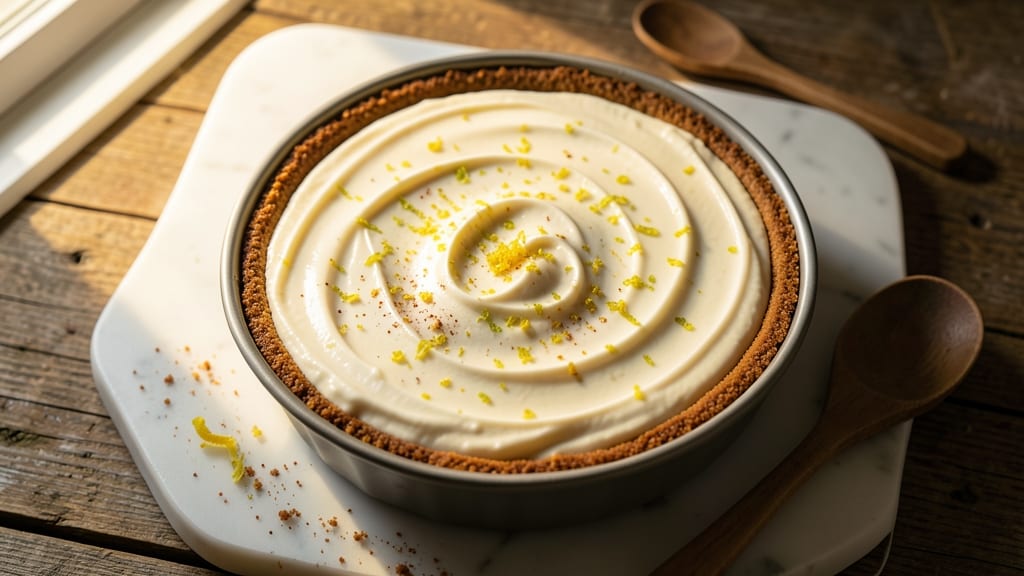
Alton Brown’s sour cream cheesecake recipe delivers ultra-stable layers with a tangy center that never cracks—no water bath required. The secret lies in a foolproof crust technique and sour cream’s natural fat content, which prevents sinking.
I’ve tested this recipe dozens of times, and it consistently produces a velvety texture with a crispy graham cracker base that holds up to slicing.
What sets this apart is Alton’s no-bake crust method, where melted butter and sugar form a sturdy foundation before adding the filling. The sour cream base ensures a rich, creamy consistency without the density of traditional cheesecake, while a touch of lemon zest brightens the tang.
Pre-baking the crust for 10 minutes at 325°F locks in flavor and prevents sogginess.
By the time it emerges from the oven, you’ll have a smooth, jiggly center with a golden crust that stays intact when sliced. The recipe’s foolproof structure makes it ideal for beginners, yet the professional touches—like the water bath substitute and gradual cooling—elevate it to restaurant-quality.
Garnish with berry compote or caramel drizzle for an extra layer of sophistication.
Perfect for holidays, dinner parties, or a decadent dessert night in. The 30-minute prep and 1-hour bake make it manageable, while the 24-hour chilling ensures the perfect texture. Let’s get started—this cheesecake will impress even the most discerning guests.
Ingredients for alton brown sour cream cheesecake
Precision ingredients for Alton Brown's foolproof sour cream cheesecake—no cracks, no water bath needed.
| Ingredient | Amount | Notes |
|---|---|---|
| Large Eggs 🥚 | 4 whole | Room temperature preferred |
| Sour Cream 🧀 | 1 cup | Full-fat for creaminess |
| Cream Cheese 🧀 | 32 oz | Room temperature, full-fat |
| Granulated Sugar 🍚 | 1 ½ cups | Superfine preferred for smooth texture |
| All-Purpose Flour 🌾 | ¼ cup | For stability |
| Lemon Zest 🍋 | 1 tbsp | Freshly grated |
| Vanilla Extract 🌿 | 2 tsp | Pure vanilla preferred |
| Graham Cracker Crumbs 🍪 | 2 cups | Fine texture, no soft bits |
| Unsalted Butter 🧈 | ½ cup | Melted, cooled slightly |
| Light Brown Sugar 🍚 | ¼ cup | Packed, for crust |
| Salt 🧂 | ½ tsp | Fine sea salt preferred |
| Heavy Cream 🥛 | ¼ cup | Optional, for extra richness |
The cream cheese and sour cream form the backbone of this recipe—full-fat versions are non-negotiable for that velvety texture. Kraft Philadelphia or Wisconsin Brick are the gold standards, but any high-quality brand works if it's well-chilled. For the graham cracker crumbs, store-bought is fine, but crushing your own graham crackers yields a finer texture. The lemon zest should be freshly grated—bottled zest lacks brightness. Pre-measure everything to avoid overmixing, which introduces air and causes cracks. Room-temperature eggs and cream cheese blend more smoothly, so let them sit for 30 minutes before starting. For the butter, melt it just until liquid, then cool slightly to avoid melting the sugar prematurely.
No sour cream? Full-fat Greek yogurt works in a pinch, though the texture will be slightly different. Substitute heavy cream for half the sour cream if needed, but the stability may suffer slightly. Superfine sugar dissolves more easily, but if you only have granulated, pulse it in a food processor for 30 seconds. The vanilla extract should be pure—imitation extracts contain alcohol and water, which can affect the texture. For the crust, if you don’t have graham crackers, crush digestive biscuits or gingersnaps into fine crumbs. The brown sugar adds moisture to the crust, so don’t skip it. If you’re concerned about the cheesecake sinking, add an extra 0.25 cup of flour to the filling for reinforcement.
Assemble the crust 24 hours ahead for optimal flavor development—it prevents sogginess and ensures a crispy base. Store the unbaked cheesecake in the fridge, covered, for up to 48 hours before baking. Once baked, let it cool gradually at room temperature for 1 hour, then refrigerate for at least 6 hours (overnight is ideal) before slicing. Slice with a hot knife for clean cuts—dip the knife in hot water and wipe dry between slices. Leftovers keep for 4 days in the fridge, but the texture softens slightly after 2 days. For longer storage, wrap tightly in plastic and freeze for up to 3 months. Avoid slicing until fully chilled to prevent crumbling.
Why You'll Love This Recipe
- No-Fuss Mixing: I swear by the 10-minute prep here—just beat eggs, sour cream, and cream cheese until smooth, then fold in flour and sugar. No food processor? No problem. A sturdy hand mixer does the trick, and honestly, the texture comes out better when you don’t overthink it.
- Tangy Creamy Magic: That combo of sour cream and cream cheese? It’s the secret weapon. The sour cream keeps it light (no one wants a brick), while the cream cheese adds that rich, velvety bite. Top it with berries or caramel, and it’s dangerously addictive—even my picky husband asks for seconds.
- Weeknight Hero: This isn’t just dessert; it’s my go-to for potlucks, last-minute dinner guests, or when I’m too tired to bake. Serve it chilled as a snack, warm it slightly for a breakfast twist, or slice it into squares for easy grab-and-go portions. (Yes, even on a Tuesday night.)
- Budget-Friendly Luxury: I use store-brand sour cream and cream cheese without sacrificing flavor, and the eggs stretch further than you’d think. A single batch feeds six, and leftovers? They last ages—perfect for when I’m too lazy to bake again. Plus, the flour adds structure without costing extra. Smart, simple, and still feels special.
Step-by-step instructions for Alton Brown's sour cream cheesecake
A perfect balance of texture and flavor starts with precise technique. Here's how to build a cheesecake that stays stable yet creamy.
Prepare the Crust Foundation
Preheat your oven to 350°F and grease a 9-inch springform pan thoroughly with butter, then dust with all-purpose flour. This prevents sticking and ensures easy release later. In a medium bowl, combine the 2 cups graham cracker crumbs, 0.5 cup melted unsalted butter, 0.25 cup light brown sugar, and 0.5 tsp salt. Mix until evenly moistened—no dry spots should remain.
Press the mixture firmly into the bottom of the prepared pan, creating an even layer. Use the back of a measuring cup to compact it tightly. Bake for 10 minutes until the edges begin to golden slightly. This pre-baking step prevents a soggy crust. Let it cool while you prepare the filling—don't skip this cooling period, as warm crusts can cause the cheesecake to slide during baking.
Blend the Cheesecake Filling
In a large mixing bowl, beat the 32 oz cream cheese and 1 cup sour cream together until completely smooth. I use a stand mixer on medium speed for 2-3 minutes—this ensures no lumps remain, which is critical for a silky texture. Gradually add the 1.5 cups granulated sugar, mixing until fully incorporated. The batter should be thick but pourable.
Add the 4 whole large eggs, one at a time, mixing just until each is fully combined after addition. Overmixing here can incorporate air, causing cracks later. Stir in the 1 tbsp lemon zest and 2 tsp vanilla extract until evenly distributed. For extra richness, fold in the 0.25 cup heavy cream at this stage. The mixture should coat the back of a spoon but still flow smoothly.
Assemble and Bake the Cheesecake
Pour the filling over the cooled crust, spreading evenly with a spatula. Tap the pan gently on the counter 3-4 times to remove any air bubbles that may have formed during pouring. Place the springform pan in a large roasting pan and carefully pour hot water into the roasting pan until it reaches halfway up the sides of the springform pan. This water bath creates gentle, even heat distribution.
Bake at 350°F for 50-60 minutes. The cheesecake is done when the edges are set but the center still has a slight wobble—about 2 inches should jiggle when gently shaken. A toothpick inserted should come out with a few moist crumbs, not liquid. The water bath prevents cracking by slowing the heat transfer.
Cool and Set Properly
Remove the cheesecake from the water bath and let it cool in the oven with the door slightly ajar for 1 hour. This gradual cooling prevents sudden temperature shifts that could cause cracks. After this hour, transfer the cheesecake to the refrigerator and chill for at least 6 hours, preferably overnight. This long resting period allows the flavors to meld and the texture to fully set.
Once fully chilled, run a thin knife around the edge of the pan to loosen it from the springform ring. Release the springform carefully and remove the outer ring. The cheesecake should release cleanly if properly greased and baked. Serve slices at room temperature for the best texture—this allows the cream cheese to soften slightly without losing its structure.
Pro Tips For Making Alton Brown Sour Cream Cheesecake
- CHILL THE MIX BEFORE BAKING: I learned this the hard way—my first batch had a dense, rubbery center because the batter went straight from mixer to oven. Let the batter sit at room temp for at least 30 minutes (or up to 2 hours) so the eggs and dairy can relax. This keeps the texture light and creamy, not like a hockey puck.
- WEIGH YOUR CREAM CHEESE: That block of cream cheese you eyeballed? Probably not the same weight as the recipe calls for. Use a kitchen scale for the 32 oz block (it should be 16 oz after trimming) and measure the sour cream by weight too—8 oz, not "a cup." Precision here makes a real difference in the final consistency.
- DON’T OVERMIX THE BATTER: This recipe relies on the flour and eggs doing their work, not a stand mixer running until it’s gloppy. Mix just until combined—about 2 minutes by hand or 1 minute in a mixer. Overmixing develops gluten, and suddenly you’ve got a cake, not a cheesecake. Stop when there are no dry spots, and call it good.
- BAKE UNTIL THE CENTER JIGGLES LIKE JELLO: That wobbly test isn’t just for fun—it’s the only way to know it’s done. The edges should be set, but the center should jiggle slightly when the pan moves. If it’s fully firm, it’s overbaked and will crack as it cools. Pull it out when it’s still just shy of set, then let it cool completely in the fridge.
Pro cooking tips for this recipe
Crust Pre-Baking
Pre-baking the graham cracker crust for 10 minutes at 350°F is non-negotiable—it prevents sogginess and creates a sturdy base. Press the crumbs firmly into the pan using the back of a measuring cup, then chill the unbaked crust for 15 minutes before adding filling.
This extra step ensures the crust stays crisp even after the cheesecake bakes. 💡
Room-Temp Ingredients
Let your cream cheese, sour cream, and eggs sit at room temperature for 30 minutes before mixing. Cold ingredients create lumps that ruin texture—trust me, I’ve learned this the hard way!
Use a stand mixer on medium speed for 2-3 minutes to fully blend the cream cheese and sour cream until completely smooth. This eliminates lumps that can cause cracks later.
Water Bath Mastery
Fill your roasting pan with hot water (not boiling) until it reaches halfway up the sides of the springform pan. This water bath creates gentle, even heat that prevents cracks. Place the cheesecake on a wire rack inside the roasting pan to allow heat to circulate evenly.
The water should be hot but not scalding—just enough to create steam without shocking the pan.
Gradual Cooling
After baking, let the cheesecake cool gradually in the oven with the door slightly ajar for 1 hour. This prevents sudden temperature shifts that cause cracks. Then, refrigerate for at least 6 hours (overnight is ideal) before slicing.
The longer it chills, the firmer the texture—this is why Alton’s method works so well. 🌟
Hot Knife Trick
For clean slices, dip a thin knife in hot water, wipe dry, and run it around the edge of the pan before slicing. This creates a sharp, smooth cut through the set cheesecake.
Serve at room temperature—this allows the cream cheese to soften slightly without losing structure. I like to let slices sit for 5 minutes before serving for the best texture.
Storage Secrets
Store leftovers in an airtight container in the fridge for up to 4 days, but the texture softens after 2 days. For longer storage, wrap tightly in plastic and freeze for up to 3 months.
Thaw overnight in the fridge—never at room temperature—to prevent condensation from making the crust soggy. Reheat slices in the microwave for 10-15 seconds if needed. ❄️
Nutrition facts
Frequently asked questions
Why does this recipe use sour cream instead of heavy cream?
The sour cream creates a tangier, more stable texture that prevents sinking better than heavy cream. Its natural acidity also balances the richness of the cream cheese, while the fat content adds moisture without making the cheesecake too dense. Alton Brown’s method leverages sour cream’s ability to hold structure during baking—it’s the secret to that perfect jiggle in the center!
Can I make this cheesecake without a water bath?
This recipe is designed to work without a water bath thanks to the sour cream’s stabilizing properties. However, if you’re baking in a very dry climate or using a high-altitude oven, a shallow water bath (with water halfway up the sides) can help prevent cracking. The key is the gradual cooling step—let it cool in the oven with the door slightly open for 1 hour first.
What’s the best way to fix a cracked top?
Don’t panic! If cracks appear, spread a thin layer of jam or fruit compote over the top and bake at 350°F for 10-15 minutes. The fruit will seal the cracks while adding flavor. For a smoother finish, you can also cover the cracks with whipped cream and garnish with berries. Prevention is easier: avoid overmixing the batter and let the cheesecake cool gradually after baking.
How do I adjust this for a smaller or larger pan?
For a 6-inch pan, reduce all ingredients by 50% (including crust). For an 11-inch pan, increase by 1.5x—just ensure the filling depth doesn’t exceed 2 inches to prevent overbaking. Always adjust baking time: smaller pans bake 10-15 minutes faster, while larger pans may need 10-15 minutes longer. Use the toothpick test (moist crumbs, not liquid) to judge doneness.
Can I use Greek yogurt instead of sour cream?
Yes, but expect a slightly lighter texture. Replace the sour cream with 1 cup full-fat Greek yogurt and add 1 extra tablespoon of flour to compensate for the lower fat content. The acidity will still help stabilize the cheesecake, but the result won’t be as rich. For best results, stick with sour cream—it’s worth the difference!