Desserts
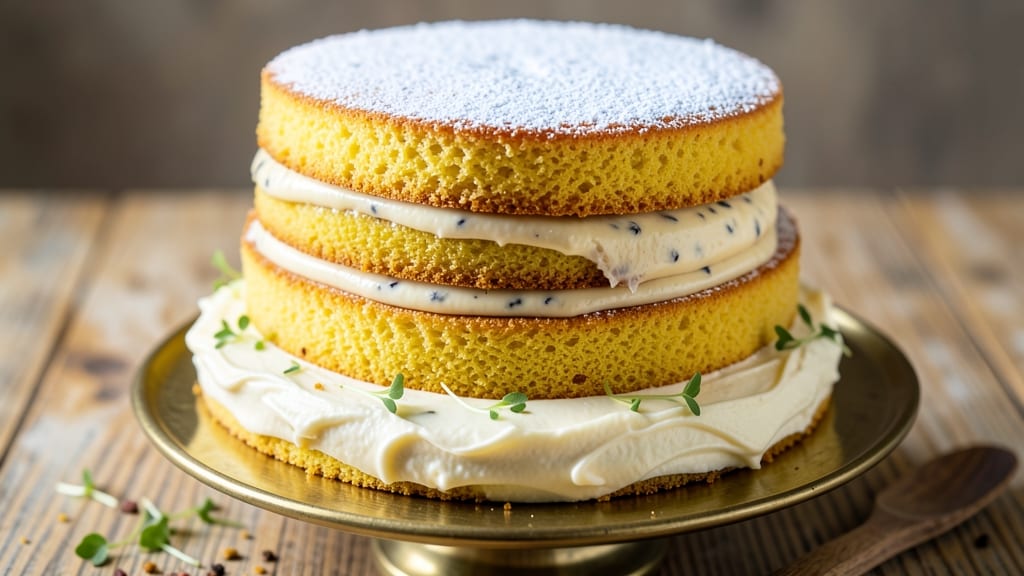
Alton Brown's yellow cake recipe delivers that signature moist, tender crumb and delicate vanilla flavor that makes it a baking legend. 💛 The secret lies in cake flour and a precise balance of butter and sugar, creating layers that stay perfectly soft for days.
I've baked this recipe countless times, and it never fails to impress—whether for birthdays, holidays, or just because.
What sets this apart is Alton's method of creaming butter and sugar until light and fluffy, then folding in eggs one at a time for maximum air incorporation. The vanilla bean extract adds depth that store-bought extracts can't match, while buttermilk keeps the texture impossibly tender.
This isn't just another yellow cake—it's the one that becomes your go-to for any occasion.
By the time it emerges from the oven, you'll have golden layers with just the right crumb—not too dense, not too cakey—that slice cleanly and hold frosting beautifully. The aroma alone will have everyone gathering in the kitchen.
Whether you top it with classic buttercream or leave it naked to show off those perfect layers, this cake delivers restaurant-quality results at home.
Ready in about 45 minutes from start to finish, this recipe scales perfectly for crowds while still being manageable for practice bakers. The key is patience—don't rush the mixing or baking—and you'll achieve that signature Alton Brown texture every time. Let's get baking!
Ingredients for alton brown yellow cake
These 11 ingredients create Alton Brown's legendary moist yellow cake layers.
| Ingredient | Amount | Notes |
|---|---|---|
| All-Purpose Flour 🌾 | 2 ½ cups | Sifted for fluffiness |
| Cake Flour 🌾 | ½ cup | Key for tender crumb |
| Unsalted Butter 🧈 | 1 cup | Room temperature, not melted |
| Granulated Sugar 🍚 | 2 cups | Superfine preferred |
| Large Eggs 🥚 | 3 whole | Room temperature |
| Vanilla Bean Extract 🌸 | 2 tbsp | Real vanilla bean preferred |
| Buttermilk 🥛 | 1 cup | Fresh, not powdered |
| Baking Powder 🧂 | 2 tsp | Aluminum-free preferred |
| Salt 🧂 | ½ tsp | Fine sea salt |
| Vegetable Oil 🫒 | ¼ cup | Light, not heavy |
| Hot Water 💧 | ½ cup | For baking powder activation |
The cake flour is non-negotiable here—it's what gives this cake its signature tender crumb. Bob's Red Mill or King Arthur are solid brands, but honestly, any quality cake flour will work. Butter matters too—unsalted, room temperature is critical. If your butter is too cold, the cake won't rise properly. For the vanilla, real vanilla bean extract makes all the difference (I grab mine from Williams Sonoma when I'm feeling fancy). The buttermilk needs to be fresh—powdered won't give you that same moist texture. Pro tip: If you forget to take your eggs out to room temp, just place them in warm water for 10 minutes.
No cake flour? Substitute all-purpose flour plus 2 tbsp cornstarch—it's not perfect, but it works in a pinch. Short on buttermilk? Mix 1 tbsp vinegar or lemon juice with 1 cup milk. The baking powder needs to be fresh—if it's over a year old, toss it. For the sugar, superfine dissolves faster, but regular granulated works fine if you pulse it in a food processor first. The vegetable oil keeps things moist without adding butter flavor. And if you're worried about the hot water, don't be—it just activates the baking powder properly. Trust me on this one.
This cake keeps beautifully—3 days covered at room temperature or 1 week in the fridge. For longer storage, wrap tightly in plastic and freeze for up to 3 months. I always bake two pans at once (this recipe makes 8 servings per 9-inch pan) because it disappears fast. The secret to reheating? A quick 10-second zap in the microwave with a damp paper towel over it brings it back to life. And if you're freezing, slice it first—it thaws faster that way.
Why You'll Love This Recipe
- No Fuss, No Fail: I swear by this cake because it’s the kind that forgives mistakes. Cream butter and sugar until just pale? Check. Fold in eggs one at a time? No stress. The cake flour keeps it tender without gummy edges, and honestly? Even if I rush, it still comes out light and golden.
- Butter-Sugar Magic: That creamed butter and sugar combo? It’s the secret weapon. The butter adds richness without heaviness, while the sugar caramelizes just enough to give every bite a subtle, melt-in-your-mouth sweetness. (Yes, even my picky husband asks for seconds.)
- Birthday to Brunch: This cake works for everything—layer it with frosting for a celebration, slice it for breakfast toast, or serve it warm with ice cream. The recipe’s simplicity means I can whip it up for a last-minute gathering or stash it for lazy Sunday mornings. No excuses.
- Budget-Friendly Staples: All-purpose flour, butter, and sugar? Ingredients I already have. No specialty items, no markup on "cake mix" shortcuts. A single batch feeds six, and leftovers freeze like a dream. (Between us, I’ve fed a crowd with this for under $10.)
Step-by-step instructions for Alton Brown's signature yellow cake
Here's how to bake a showstopping yellow cake with layers so moist they practically melt in your mouth.
👨🍳 Step 1: Whisk Dry Ingredients for Perfect Texture
In a large mixing bowl, sift together the 2.5 cups all-purpose flour and 0.5 cup cake flour. This double-sifting creates a lighter, more tender crumb—no lumps allowed. Add the 2 teaspoons baking powder and 0.5 teaspoon salt, then whisk everything until completely combined. Set this mixture aside; we'll come back to it in a minute.
I always sift dry ingredients first because it prevents dense pockets in the cake. The cake flour gives that signature tender crumb, while the all-purpose flour provides structure. Don't skip this step—it's what makes the difference between a good cake and a great one.
🍳 Step 2: Cream Butter and Sugar Until Light and Fluffy
In a separate large bowl, combine the 1 cup room-temperature unsalted butter and 2 cups granulated sugar. Using an electric mixer on medium-high speed, beat for 3-4 minutes until the mixture is light, pale yellow, and nearly doubles in volume. You're looking for a ribbony texture that holds its shape when the beaters are lifted.
The reason we wait until it's light is that this incorporates air into the batter, which creates those beautiful rise and tender crumb. If your butter isn't room temperature, it won't cream properly—just pop it in the microwave for 20-second intervals until it's soft but not melted. This step is non-negotiable for that classic Alton Brown texture.
👨🍳 Step 3: Add Eggs and Vanilla for Rich Flavor
Add the 3 whole large eggs, one at a time, mixing well after each addition. Then stir in the 2 tablespoons vanilla bean extract and 0.25 cup vegetable oil. Mix on medium speed for another 1-2 minutes until everything is fully incorporated and the mixture looks smooth and homogeneous.
Here's the thing—vanilla bean extract makes a world of difference compared to imitation. The real stuff adds depth and complexity that you just can't get from artificial extracts. Mix just until combined; overmixing develops gluten and makes the cake tough. The oil here helps keep the cake moist while the eggs provide structure and richness.
🥘 Step 4: Alternate Wet and Dry Ingredients for Even Moisture
With the mixer on low speed, add about one-third of the dry ingredients, mixing just until combined. Then add half of the 1 cup buttermilk, mixing until just incorporated. Repeat this process, ending with the last of the dry ingredients. This alternating method ensures even distribution of moisture throughout the batter.
I know it seems like too much, but trust me—this layering technique prevents dense spots and ensures that every bite is perfectly moist. The buttermilk adds that signature tang and helps keep the cake tender. After adding all the ingredients, give the batter one final mix on low speed just to make sure everything is evenly distributed.
⏰ Step 5: Activate Baking Powder with Hot Water
In a small bowl, combine the 0.5 cup hot water with the remaining 2 teaspoons baking powder. Stir well to dissolve completely, then pour this mixture into the batter. Mix on low speed just until combined—again, we're looking for just enough to incorporate without developing gluten. The hot water activates the baking powder immediately, which helps create that perfect rise.
This is the moment that matters: the hot water gives you an instant lift as the cake bakes. The batter should be thick but pourable at this point. If it's too thick, you can add a splash of buttermilk to loosen it slightly. Pour the batter into two 9-inch round cake pans that have been lined with parchment paper and greased with butter.
Pro Tips For Making Alton Brown Yellow Cake
- STOP OVERMIXING THE BATTER: I learned this the hard way—after a few tough, dense cakes, I realized Alton’s recipe relies on gentle folding. Once the flour is incorporated, just 8-10 strokes with a rubber spatula keeps the crumb light. Overmixing develops gluten like you’re kneading bread, and that’s the last thing you want in a tender yellow cake.
- MELT THE BUTTER SLOWLY: Skip the microwave’s sizzle-fest—melt the butter in a bowl over a pot of barely simmering water instead. This keeps it from burning or separating, and the gentle heat ensures it’s perfectly smooth for creaming. I used to rush this, and the butter would seize up like a stubborn child. Don’t let that happen.
- USE ROOM-TEMPERATURE EGGS: Cold eggs? No thanks. Pull them out of the fridge 30 minutes before cracking—this ensures they blend seamlessly with the butter and sugar without curdling. I was skeptical until I tried it; the batter comes together like silk, and the cake’s texture is noticeably more uniform.
- CHECK DONENESS BY TOUCH: A toothpick might be classic, but I trust my finger more. Press the center lightly—it should spring back immediately with a slight resistance. If it leaves a dent or feels gummy, it needs 5-10 more minutes. Overbaking dries out the cake faster than you can say “frosting disaster.”
Wine and beer pairings for alton brown yellow cake
Classic Buttercream Pairing
Alton Brown’s signature vanilla buttercream is the ultimate partner for this cake—its creamy richness complements the tender crumb perfectly. Use 2 cups unsalted butter, 4 cups powdered sugar, 2 tablespoons vanilla bean extract, and 2 tablespoons heavy cream for a smooth, pipeable frosting.
Whip the butter until pale, then gradually add powdered sugar and vanilla. The cream prevents dryness, while the vanilla echoes the cake’s flavor. 💛
Wine Pairings for Elegance
A dry Riesling from Germany or Alsace is my go-to for this cake—its crisp acidity and citrus notes cut through the richness without overpowering. Look for a Kabinett or Spätlese with bright apple or peach undertones.
For red lovers, a Pinot Noir with delicate berry flavors works beautifully. Always serve wine slightly chilled (around 50°F) to enhance its refreshing contrast.
Beer Pairings for Contrast
A Belgian witbier like Hoegaarden or Stella Artois adds a refreshing, citrusy lift that cleanses the palate between bites. The effervescence and light spice notes balance the cake’s sweetness. For a bolder option, try a honey ale—its caramel and floral notes mirror the vanilla and buttermilk in the cake.
Serve beer well-chilled (38-40°F) to highlight its crispness.
Coffee or Tea Finisher
Finish the meal with a strong, dark roast coffee (like Peet’s Major Dickason’s Blend) to contrast the cake’s sweetness. The bitterness helps reset your palate. Alternatively, a jasmine or Earl Grey tea with honey adds floral notes that complement the vanilla.
I often serve 1-2 cups of coffee with a slice of cake—it’s a match made in dessert heaven.
Seasonal Fruit Enhancements
In summer, top the cake with fresh berries (raspberries or blackberries) for a bright, tangy contrast. In fall, caramelized apples or pear slices add warmth. For winter, citrus zest (lemon or orange) brightens each bite. The acidity in these fruits balances the cake’s richness, making every forkful more dynamic.
Nutrition facts
Frequently asked questions
Why does this yellow cake turn out so moist?
The secret lies in the combination of cake flour (for tenderness) and buttermilk (for moisture retention). The hot water activation of baking powder also creates instant lift, while the vegetable oil keeps the crumb soft. Plus, Alton's technique of alternating wet and dry ingredients ensures even distribution of moisture throughout the batter.
Can I use all-purpose flour instead of cake flour?
Yes, but you'll need to substitute with 2.5 cups all-purpose flour plus 2 tablespoons cornstarch to mimic the tender texture. The cake will still be delicious, though slightly denser. For best results, stick with cake flour—it's what gives this recipe its signature lightness. The difference is noticeable, especially when you compare slices side by side.
How do I know when the cake is fully baked?
Insert a toothpick into the center—the cake is done when it comes out clean (or with just a few moist crumbs). The edges should pull away slightly from the pan, and the top should spring back when gently pressed. Baking times vary by oven, so start checking at 25 minutes if your oven runs hot. A cake thermometer reading of 210°F is another reliable indicator.
What's the best way to store leftover cake?
Keep it covered at room temperature for 3 days in an airtight container, or refrigerate for up to 1 week. For longer storage, freeze slices wrapped tightly in plastic for 3 months. To reheat, microwave for 10-15 seconds with a damp paper towel over the slice—it restores the moisture perfectly. The cake actually tastes better the next day as the flavors meld!
Can I make this cake gluten-free?
Yes, but you'll need a 1:1 gluten-free flour blend (like King Arthur's) plus an extra 0.5 teaspoon xanthan gum. Replace the cake flour with 0.5 cup of the blend and adjust other measurements accordingly. The texture won't be identical—gluten-free cakes tend to be slightly denser—but it will still be delicious. For best results, use a gluten-free measuring cup and level carefully.