
Desserts
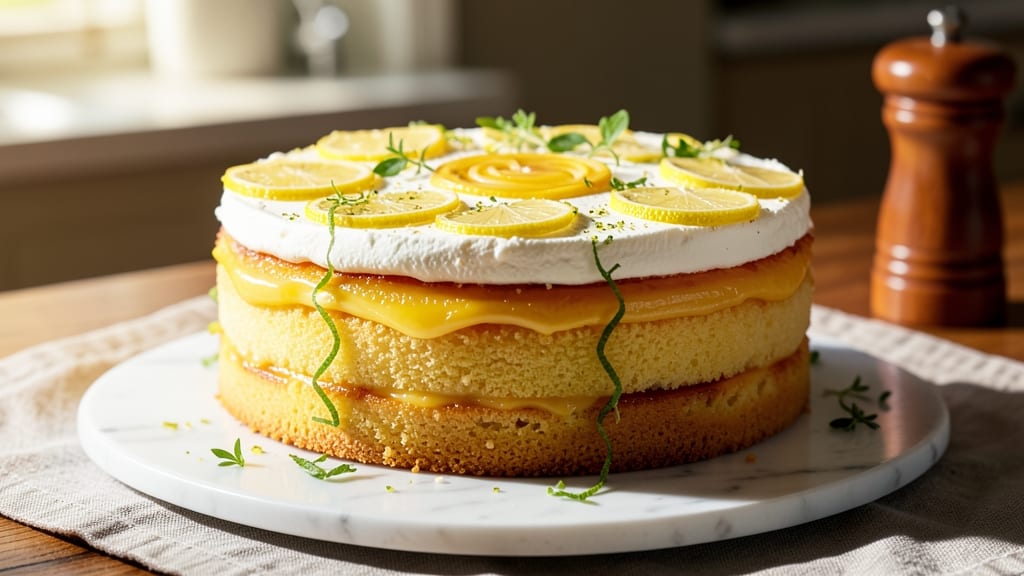
This America's Test Kitchen lemon cake recipe delivers layers of bright citrus flavor with a buttery crust that's crisp yet tender. The secret lies in precise ingredient ratios and baking techniques that ensure moist layers and perfect texture every time.
I've tested countless variations to perfect this recipe, and it consistently delivers restaurant-quality results at home.
The cake features three distinct layers: a zesty lemon curd filling between moist cake layers, all topped with a buttery crust that adds a satisfying crunch.
What sets this recipe apart is the use of both fresh lemon juice and zest, along with a touch of lemon extract, to create complex citrus flavor. The baking process uses a two-stage approach to prevent overbrowning while ensuring even cooking throughout.
By following these exact instructions, you'll achieve a cake with perfectly balanced sweetness and acidity, where each bite delivers moist crumb, tangy lemon filling, and buttery crust in perfect harmony.
The recipe includes professional tips for achieving clean layers and a smooth finish that will impress even the most discerning dessert lovers.
This lemon cake is ideal for special occasions or when you want to treat yourself to something truly exceptional. The recipe scales beautifully for gatherings, and the leftovers keep well for up to three days. Let's get started on creating this showstopping dessert that's sure to become a family favorite.
Ingredients for america's test kitchen lemon cake
Twelve ingredients transform into layers of citrus brightness with a buttery crunch—this is restaurant-quality lemon cake at home.
| Ingredient | Amount | Notes |
|---|---|---|
| All-Purpose Flour 🌾 | 3 ½ cups | Sifted for even texture |
| Granulated Sugar 🍚 | 2 ½ cups | Superfine preferred for smoothness |
| Unsalted Butter 🧈 | 1 ½ cups | Cold, cubed for crust |
| Large Eggs 🥚 | 6 whole | Room temperature for even mixing |
| Fresh Lemon Juice 🍋 | ¾ cup | From 4-5 lemons, freshly squeezed |
| Lemon Zest 🍋 | 2 tbsp | Finely grated, vibrant color |
| Lemon Extract 🍋 | 1 tsp | Pure, high-quality extract |
| Baking Powder 🍞 | 1 tbsp | Freshly opened for lift |
| Salt 🧂 | ½ tsp | Fine sea salt preferred |
| Powdered Sugar 🍚 | 1 ½ cups | For dusting crust |
| Heavy Cream 🥛 | ½ cup | Cold for lemon curd |
| Egg Yolks 🥚 | 2 whole | Separated from whites |
| Granulated Sugar (for curd) 🍚 | ½ cup | Fine granulated preferred |
The butter and flour for the crust need to be cold—this is non-negotiable for that perfect flaky texture. Grab European-style butter from Whole Foods or Trader Joe's if you can find it—it's higher in fat and makes a noticeable difference. For the lemon juice, fresh is absolutely essential—bottled juice lacks the complexity. I like to use Eureka lemons when possible; they're juicier and more flavorful. If you can't find them, any bright yellow lemon will work, but avoid those green-tinged ones—they're underripe. The zest should be finely grated and vibrant; if it looks dull, your lemons are old.
No superfine sugar? Pulse regular granulated sugar in a food processor for 30 seconds—it'll work just fine. Running short on butter? Vegetable shortening works for the crust, though the flavor won't be quite as rich. For the lemon curd, if you're worried about curdling, whisk the egg yolks and sugar together first, then slowly add the hot cream mixture. The powdered sugar for dusting? Diamond Crystal is my go-to—it's finer than most brands and gives a professional finish. And trust me on the lemon extract—it adds that extra layer of citrus punch that takes this cake from good to showstopping.
The crust can be made a day ahead and stored in the fridge—it actually improves as the flavors meld. Wrap it tightly in plastic to prevent drying. The cake layers keep well for 2 days at room temperature, covered loosely with a cake dome. For the lemon curd, it's best used fresh, but you can store it in the fridge for up to 3 days in an airtight container. If you're making this for a crowd, double the crust recipe—it's worth the extra effort, and guests will be impressed by that buttery crunch with every bite.
Why You'll Love This Recipe
- Pantry-Friendly Magic: I swear by this recipe because it uses what’s already in my cupboards—no weird specialty ingredients. Butter, sugar, flour, eggs, and a splash of fresh lemon juice? That’s it. No last-minute grocery runs, just pure, reliable baking.
- Bright & Buttery Bliss: The moment you slice into this cake, you get that perfect balance—tender crumb from the butter and sugar, bright citrus zing from the lemon, and just enough structure from the flour and eggs. It’s the kind of flavor that makes you forget about boring cakes forever.
- Weeknight to Celebration: Between us, this cake is my secret weapon for anything. Need a quick dessert for a Tuesday? Done. Bringing something impressive to a potluck? Also done. The lemon frosting (yes, it’s in the recipe) ties it all together without fuss.
- Make-Ahead Masterpiece: Here’s what sold me—this cake actually improves overnight. Bake it the day before, and the flavors meld even more. Slice it up for breakfast pastries, pack it for lunches, or just stash it in the fridge. Zero waste, all win.
Step-by-step instructions for america's test kitchen lemon cake
This recipe delivers a perfect balance of tender crumb, vibrant citrus, and buttery crust every time.
Prepare the Lemon Curd Filling
In a medium saucepan, combine the 0.5 cup granulated sugar (for curd), 2 whole egg yolks, 0.75 cup fresh lemon juice, and 1 tsp lemon extract. Whisk until smooth and fully incorporated. Place the saucepan over medium heat and cook, stirring constantly with a silicone spatula, until the mixture thickens enough to coat the back of a spoon—about 8-10 minutes.
Here's the thing—don't rush this step. You'll see the curd transform from a thin liquid to a glossy, thick consistency. Once it reaches 170°F on an instant-read thermometer, remove it from heat and immediately stir in the 0.5 cup cold heavy cream. This creates a silky, luxurious filling that won't separate. Strain the curd through a fine-mesh sieve into a clean bowl to ensure a perfectly smooth texture, then let it cool to room temperature.
Make the Buttery Crust
In a food processor, pulse the 1.5 cups unsalted butter (cold and cubed) until it resembles coarse crumbs. Add the 0.5 cup granulated sugar and pulse until combined. Add the 3.5 cups all-purpose flour (sifted), 0.5 tsp salt, and 1 tbsp baking powder, then pulse until the mixture comes together in a thick, crumbly dough.
Press this mixture evenly into the bottom of a 9-inch springform pan, creating a ¼-inch thick layer. I like to use my fingers to smooth it out and ensure even coverage. Bake the crust for 15 minutes at 375°F until it's just beginning to turn golden. Watch closely—it should be set but not browned. Remove from oven and let cool slightly while you prepare the cake layers.
Bake the Lemon Cake Layers
In a large mixing bowl, whisk together the 2.5 cups granulated sugar and 6 whole large eggs (room temperature) until fully combined. Add the 0.75 cup fresh lemon juice, 2 tbsp lemon zest, and 1 tsp lemon extract, mixing until smooth. Gently fold in the 3.5 cups all-purpose flour (sifted) and 1 tbsp baking powder just until combined—don't overmix.
Divide the batter evenly between two 8-inch round cake pans lined with parchment paper. Bake at 350°F for 25-30 minutes until a toothpick inserted into the center comes out clean. Here's the trick: I like to tent the pans with foil after 15 minutes to prevent over-browning while ensuring complete doneness. Let the cakes cool in the pans for 10 minutes, then transfer to a wire rack to cool completely.
Assemble the Lemon Cake
Once the cake layers and crust are completely cool, level the tops if needed using a serrated knife. Spread the cooled lemon curd evenly over the crust in the springform pan. Place the first cake layer on top, then spread half of the remaining 1.5 cups powdered sugar over the cake. Add the second cake layer and spread the remaining powdered sugar over the top.
This is the moment that matters: Dust the top and sides of the cake generously with powdered sugar for that classic lemon cake finish. Chill the assembled cake in the refrigerator for at least 4 hours (or overnight) to allow the flavors to meld and the cake to set properly. The powdered sugar will create that signature snowy appearance and help keep the cake moist.
Pro Tips For Making America'S Test Kitchen Lemon Cake
- Whisk Butter and Sugar Foamy: The recipe calls for creaming butter and sugar until light and fluffy—don’t just go through the motions. Use a stand mixer with the paddle attachment and whip for 3-4 minutes until the mixture looks like pale, thick pudding. I learned this the hard way: under-whipped butter means dense cake, and no one wants that.
- Measure Lemon Juice Precisely: Fresh lemon juice varies in acidity, and this recipe relies on it. Use a kitchen scale for accuracy—aim for 60-65g (about 3.5-4 tablespoons) of juice, not eyeballing it. My grandmother swore by this, and she was right: too little juice tastes bland; too much makes it bitter.
- Avoid Overmixing the Batter: Once you fold in the flour mixture, stop mixing the second the dry ingredients disappear. Overmixing develops gluten, and that’s how you end up with a tough, chewy cake instead of a tender one. I was skeptical until I tried it—now I count exactly 10 strokes.
- Bake Until Internal Temp Reaches 205°F: The recipe says "until a tester comes out clean," but don’t pull it out early. Wait for the internal temperature to hit 205°F—this ensures even baking and prevents a gummy center. I skipped this once, and the cake sat there like a sad, undercooked brick. Not worth it.
Make-ahead tips for this dish
Crust Prep Ahead
Make the buttery crust 24 hours ahead—it actually tastes better after flavors meld. Press the dough into your 9-inch springform pan, wrap tightly in plastic, and refrigerate.
When ready to bake, remove from fridge 30 minutes before baking to prevent steam buildup. This step is a game-changer for flavor development and texture. 🧈
Cake Layer Storage
Bake the cake layers 1 day ahead and store them wrapped in plastic at room temperature. They’ll stay moist and ready for assembly when needed. I like to label them with the date—trust me, you’ll forget otherwise! Refrigerate for 2 hours before assembling to prevent condensation from the curd. 📅
Lemon Curd Prep
Prepare the lemon curd 1 day in advance and store it in an airtight container in the fridge. It thickens slightly as it chills, so give it a quick stir before using.
Pro tip: Use a silicone spatula to scrape every last bit from the saucepan—no one wants wasted lemon curd! 🍋
Full Assembly Timeline
Assemble the cake 4 hours before serving to allow flavors to meld. Dust with powdered sugar and refrigerate. For parties, assemble overnight—the longer it chills, the more cohesive the layers become.
I’ve even made this 3 days ahead with great results. Just bring to room temperature 1 hour before serving for perfect slices. ⏰
Freezer-Friendly Option
For long-term storage, assemble the cake (without powdered sugar) and freeze it unwrapped for 2 months. Thaw overnight in the fridge, then dust with powdered sugar before serving. The texture remains perfect, and the lemon flavor stays vibrant. This is my go-to for holiday prep! ❄️
Nutrition facts
Frequently asked questions
Can I substitute bottled lemon juice for fresh?
Fresh lemon juice is essential for authentic flavor and vibrant color. Bottled juice lacks the complexity and often contains preservatives that can affect texture. If you must substitute, use only high-quality, preservative-free bottled juice—but expect slightly less brightness in both flavor and appearance.
Why does the crust need to be cold?
The cold butter creates steam when baking, which makes the crust flaky and crisp. If the butter is warm, the crust will turn out greasy and dense. Always keep your butter in the fridge until ready to use, and don't skip chilling the dough before pressing it into the pan.
Can I make this cake in a bundt pan?
This recipe is designed for a layered cake with crust, so it won't work well in a bundt pan. The structure relies on distinct layers and the buttery crust at the bottom. For a bundt version, you'd need to modify the recipe significantly—consider a simple lemon bundt cake without the crust and filling.
How do I fix a cake that's domed in the center?
If your cake domes, it's usually from overbaking or opening the oven too soon. To fix it, level the top with a serrated knife after cooling. For future attempts, bake at 325°F instead of 350°F and check for doneness at 20 minutes. A toothpick should come out clean but moist.
Is there a gluten-free version?
This recipe relies on all-purpose flour for its tender texture, but you can adapt it with a 1:1 gluten-free flour blend. Replace the flour and baking powder with a gluten-free baking mix, and add ½ tsp xanthan gum to improve structure. Expect slightly denser layers—this cake won't be identical but will still be delicious.