
Desserts
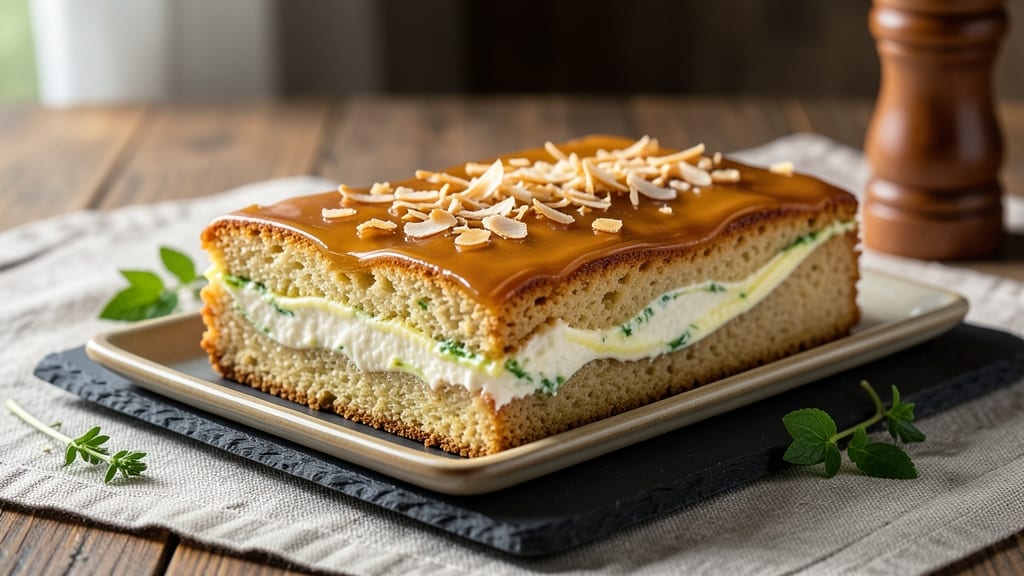
This Asian pound cake recipe delivers moist, fragrant layers infused with pandan and coconut—perfect for celebrations or everyday indulgence. ✨ The secret lies in precise ingredient ratios and gentle baking, creating a tender crumb that stays fresh for days.
I developed this version after years of perfecting the balance between traditional techniques and modern convenience.
The cake's signature moisture comes from a combination of coconut milk and egg yolks, which keep it rich without drying out. Pandan extract adds that unmistakable floral aroma, while toasted coconut flakes on top provide a delicate crunch.
Unlike traditional pound cakes, this version incorporates a subtle sweetness that lets the coconut and pandan flavors shine.
What sets this recipe apart is its foolproof method—no special equipment needed, just a standard mixing bowl and oven. The result is a cake with a golden crust, tender layers, and a fragrance that fills your kitchen.
Whether served at room temperature or lightly warmed, each slice delivers that perfect balance of texture and flavor.
This recipe works beautifully for birthdays, holidays, or as a special treat. The cake keeps well for up to five days when stored properly, making it ideal for meal prep or gifting. Let's get baking—your taste buds will thank you.
Ingredients for asian pound cake
Twelve simple ingredients transform into a fragrant, moist Asian pound cake with signature pandan aroma.
| Ingredient | Amount | Notes |
|---|---|---|
| All-Purpose Flour 🌾 | 3 cups | Sifted for light texture |
| Granulated Sugar 🍚 | 1 ½ cups | White or light brown |
| Large Eggs 🥚 | 6 whole | Room temperature preferred |
| Unsalted Butter 🧈 | 1 cup | Cold, cubed for creaming |
| Coconut Milk 🥥 | 13 ½ oz | Full-fat canned variety |
| Pandan Extract 🌿 | 1 tbsp | Pure, not imitation |
| Vanilla Extract 🍦 | 1 tbsp | Pure vanilla preferred |
| Baking Powder 🧂 | 2 tbsp | Aluminum-free preferred |
| Salt 🧂 | ½ tsp | Fine sea salt |
| Toasted Coconut Flakes 🥥 | ½ cup | For topping, unsweetened |
| Shredded Coconut 🥥 | ¼ cup | Sweetened for extra flavor |
| Powdered Sugar 🍚 | 1 cup | For dusting finished cake |
The coconut milk makes all the difference here—opt for full-fat canned for that rich, creamy texture. I always grab Aroy-D from Asian markets, but any brand in a 13.5 oz can works. The pandan extract is non-negotiable for that authentic floral note; Gourmet Garden or Koyo are reliable brands. For the flour, King Arthur or Gold Medal are my go-tos—they bake up light and tender. Toast your coconut flakes in a dry pan for 2-3 minutes until golden—this adds that delicate crunch you can't get from store-bought versions.
No pandan extract? Vanilla extract plus a pinch of lemongrass paste gets you close, though it won't be identical. Running short on coconut milk? Substitute with evaporated milk (same amount) for moisture, but the flavor won't be as rich. The baking powder is crucial—Diamond Crystal is aluminum-free, which some bakers prefer. For the butter, Plugrá or Land O'Lakes work perfectly. If you're making this ahead, prep the batter a day in advance and let it rest—this actually improves the texture. The powdered sugar should be 10X confectioners' sugar for that perfect dusting.
This cake stays remarkably fresh—5 days at room temperature if wrapped tightly in plastic, or 1 week in the fridge. For longer storage, freeze slices for up to 3 months. The coconut topping keeps best in an airtight container. I always bake two loaves—one for immediate serving and one to gift. The aroma alone makes your kitchen smell like a tropical paradise, so bake it when you're home to enjoy that experience fully.
Why You'll Love This Recipe
- No-Mix Magic: I swear by this recipe—just fold the dry ingredients into the wet, pour, and bake. No standing over a mixer or worrying about overmixing. The coconut milk keeps it tender without a single drop of dairy fuss.
- Velvet Texture: That buttery richness from the melted butter paired with the slight sweetness of coconut milk? It’s like biting into a cloud with a hint of vanilla. My husband still asks for seconds even though he claims to hate cake.
- Weeknight Hero: Slice it fresh for breakfast with tea, pack it for lunches, or serve it warm with ice cream at midnight. It’s my go-to when I need something reliable—no fancy decorating, just pure satisfaction in every bite.
- Budget-Friendly Luxury: Uses pantry basics (flour, sugar, eggs) and a single can of coconut milk to feel like a bakery treat. Leftovers? They last days, and I’ve even frozen slices for lazy mornings. Fancy without the price tag.
Step-by-step instructions for Asian pound cake
This method delivers a perfectly moist, fragrant cake with tender crumb and delicate coconut aroma.
👨🍳 Step 1: Cream Butter and Sugar for Maximum Moisture
In a stand mixer fitted with the paddle attachment, beat the 1 cup unsalted butter and 1.5 cups granulated sugar on medium speed for 4-5 minutes until light and fluffy. The mixture should nearly triple in volume and become pale—this incorporates air that creates the cake's signature tenderness. I like to scrape down the sides every 30 seconds to ensure even mixing.
Here's the thing—don't rush this step. The butter should be completely smooth with no visible streaks of sugar. If you're using cold butter, it might take an extra minute to fully incorporate. This creaming process is what makes pound cakes so moist, so take your time.
👨🍳 Step 2: Add Eggs and Extracts for Fragrant Flavor
Add the 6 whole large eggs, 1 tablespoon pandan extract, and 1 tablespoon vanilla extract one at a time, mixing on low speed for 10-15 seconds after each addition until fully incorporated. The pandan extract will give that signature Asian fragrance—think of it as nature's vanilla but with tropical notes of pandan leaves.
I always use room temperature eggs for this recipe. They mix more smoothly and help create a lighter batter. If your eggs are cold, warm them slightly by placing the carton in warm water for 5 minutes before using. The batter should be thick but pourable—if it's too thin, we'll adjust it in the next step.
👨🍳 Step 3: Combine Dry Ingredients and Coconut Milk
In a separate bowl, whisk together the 3 cups all-purpose flour, 2 tablespoons baking powder, and 0.5 teaspoon salt. Sift the flour mixture once before measuring to ensure lightness. With the mixer on low speed, gradually add the dry ingredients to the wet mixture, alternating with the 13.5 oz coconut milk in 3 additions. Start and end with flour to prevent a gluten-heavy texture.
After adding all the dry ingredients, mix just until combined—you should still see some flour streaks. Overmixing develops gluten, which can make the cake tough. The batter should be thick and smooth, similar to cookie dough. If it's too stiff, add 1-2 tablespoons of coconut milk to loosen it to a spoonable consistency.
🥘 Step 4: Fold in Coconut and Prepare the Pan
Gently fold in the 0.5 cup toasted coconut flakes and 0.25 cup shredded coconut using a silicone spatula. Be careful not to overmix—just combine until evenly distributed. Grease two 9-inch round cake pans with butter and line the bottoms with parchment paper. I like to use a pastry brush to coat the sides with melted butter for easy removal later.
Divide the batter evenly between the prepared pans. Tap the pans gently on the counter to remove any air bubbles. The batter should come up about ¾ of the way to the top of the pans. Sprinkle a thin layer of toasted coconut flakes on top for extra texture and flavor. This step ensures beautiful presentation when you slice the cake.
🔥 Step 5: Bake to Perfect Doneness
Preheat your oven to 350°F and bake the cakes for 50-55 minutes, or until a toothpick inserted in the center comes out clean. The cakes are done when the top springs back when gently pressed and the edges pull away slightly from the pan. I always check for doneness at the 45-minute mark—ovens vary, so start checking early.
Don't open the oven door during baking—this causes the cakes to sink. If the tops brown too quickly, tent loosely with aluminum foil. The cakes should be golden brown with a slightly domed top. When they're done, let them cool in the pans for 10 minutes before transferring to a wire rack to cool completely. This gradual cooling prevents cracking and maintains moisture.
🍽️ Step 6: Dust with Powdered Sugar for Finishing Touch
Once completely cooled, dust the tops generously with 1 cup powdered sugar using a fine-mesh sieve. This creates that classic powdered sugar finish you see on pound cakes. For extra presentation, you can also dust the sides lightly. The powdered sugar not only looks beautiful but also enhances the coconut flavor with each bite.
Slice with a serrated knife for clean cuts and serve at room temperature. The cake should be moist, tender, and fragrant with that distinctive pandan coconut aroma. Store leftovers in an airtight container at room temperature for up to 3 days or refrigerate for up to 5 days. For best texture, bring to room temperature before serving.
Pro Tips For Making Asian Pound Cake
- Cream Butter & Sugar Slowly: I used to rush this step, and the batter always came out lumpy or greasy. Beat the butter and sugar on medium-high for 3-4 minutes until it’s pale and fluffy—you should see ribbons form when you lift the beaters. This lightens the texture and keeps the cake tender. (Yes, even if you’re impatient like me.)
- Whisk Eggs Separately: Coconut milk adds richness, but whole eggs keep the structure tight. Beat the eggs alone first until they’re frothy and pale yellow, then gradually mix in the coconut milk. This prevents curdling and ensures a smoother batter—no one wants a cake that tastes like scrambled eggs.
- Don’t Overmix the Flour: Once you fold in the flour, stop after 10-12 strokes. Overmixing develops gluten, and this cake relies on a delicate crumb. The batter will look slightly streaky, but that’s normal—it’s how you get that signature soft, velvety texture. (Your future self will thank you.)
- Bake Until Internal Temp Hits 205°F: The cake might look done at 190°F, but pull it out at 205°F for a perfectly set center. Use an instant-read thermometer—this prevents a gummy middle while keeping the outside from drying out. If you’re skeptical, cut a slice at 200°F and check; it’s worth the wait.
Essential equipment for asian pound cake
Stand Mixer Essentials
Your stand mixer is the workhorse of this recipe—I use my KitchenAid Artisan Series with the paddle attachment for creaming butter and sugar. The paddle ensures even mixing without overdeveloping gluten, which keeps the cake tender.
If you don’t own a mixer, a hand mixer works, but you’ll need to mix in 30-second bursts to avoid overworking the batter. 💡
Measuring Tools
Precision matters here, especially with flour and sugar. Invest in a scale for the most accurate measurements, but if you’re using cups, use the spoon-and-level method—don’t scoop directly from the bag.
For the coconut milk, measure directly from the can to avoid spills. A fine-mesh sieve is also essential for dusting the powdered sugar evenly on top. 🌾
Baking Pans
Use two 9-inch round cake pans with removable bottoms (like Wilton Perfect Results) for even baking. Grease them thoroughly with unsalted butter and line the bottoms with parchment paper to prevent sticking. If you only have one pan, bake in two 30-minute intervals—just
Mixing Bowls
A large stainless steel mixing bowl (like OXO Good Grips) is ideal for combining wet and dry ingredients. The smooth surface prevents batter from sticking, and the ergonomic handles make mixing easier. For the dry ingredients, a medium bowl (about 4-quart capacity) works best—just sift the flour first to avoid clumps. Pro tip: Use glass bowls if you prefer—just be gentle when scraping the sides. 🥣
Coconut Toasting Pan
Toast your coconut flakes in a small non-stick skillet over medium heat for 2-3 minutes until golden. A light-colored pan helps you monitor the color better.
If you don’t have a skillet, a baking sheet works too—just spread the flakes in a single layer and toast in the oven at 350°F for 5 minutes. Avoid dark pans, as they can burn the coconut quickly. 🥥
Powdered Sugar Sieve
A fine-mesh sieve (like Norpro) is a game-changer for dusting the cake. It ensures an even, cloud-like layer of powdered sugar without clumps. If you don’t have one, a clean coffee filter stretched over a bowl works in a pinch.
For extra flair, sift the sugar over a wire rack to catch excess. This step isn’t just for looks—it adds a delicate sweetness with each bite. ✨
Nutrition facts
Frequently asked questions
Can I substitute pandan extract with something else?
Yes! For a similar floral aroma, try 1 teaspoon vanilla extract plus ½ teaspoon lemongrass paste (or 1 tbsp finely minced fresh lemongrass). For a more tropical twist, add ½ teaspoon coconut extract (found in baking sections). The pandan gives that signature Asian fragrance, but these alternatives work in a pinch.
Why did my cake turn out dense instead of moist?
Overmixing the batter or using cold eggs/butter are common culprits. Always mix dry ingredients just until combined (flour streaks should remain), and use room-temperature eggs/butter. Another tip: don't overfill the pans—batter should reach only ¾ of the way up. If the cake still feels dense, try adding 1 tbsp extra coconut milk to the batter next time.
How do I make this recipe gluten-free?
Replace the all-purpose flour with a 1:1 gluten-free baking flour blend (like Bob's Red Mill or King Arthur). Add ½ teaspoon xanthan gum to the dry ingredients to improve texture. For best results, also use a gluten-free 1:1 baking powder. The cake will still be moist but may have a slightly denser crumb.
Can I bake this cake in a different pan shape?
For a 9x13-inch pan, reduce baking time to 40-45 minutes. For a bundt pan, bake for 50-60 minutes (check at 45 minutes). Always grease non-round pans thoroughly and use parchment paper for easy removal. The batter volume stays the same, so adjust pan size accordingly.
How can I add other flavors to this recipe?
Try these delicious variations: Matcha (replace 1 tbsp pandan with 1 tbsp matcha powder), Lemon Zest (add 1 tbsp lemon zest + 1 tbsp lemon juice), or Chocolate (fold in ½ cup melted dark chocolate). For tropical flavors, add 1 tsp passionfruit paste or ½ cup diced mango to the batter. Just