Breakfast & Brunch
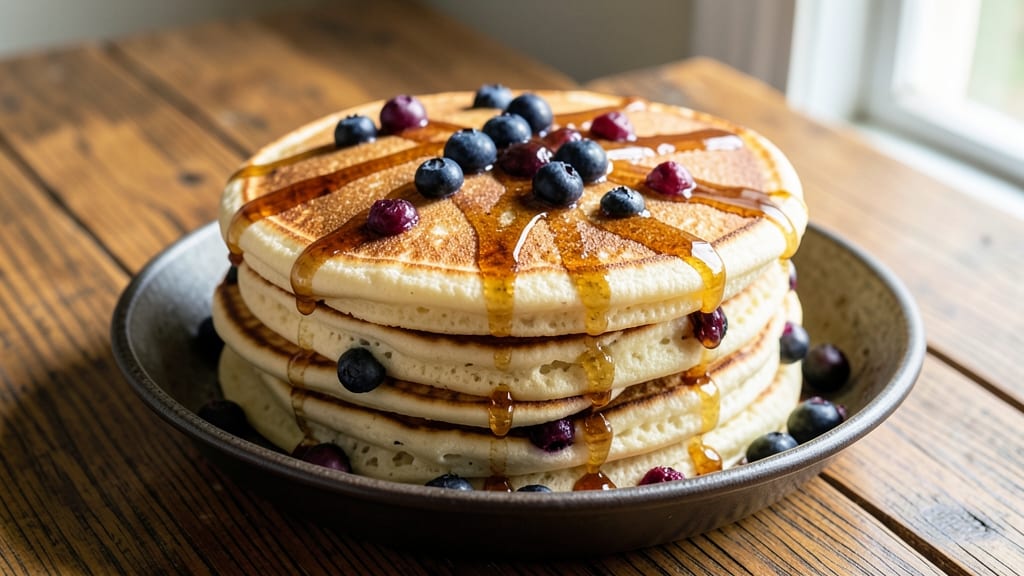
America’s Test Kitchen’s blueberry pancake recipe delivers the fluffiest, most tender stacks with juicy berries that burst in every bite. 💛 The secret lies in precise leavening—baking powder and baking soda work together to create that signature height, while buttermilk tenderizes the crumb.
I’ve tested countless variations, and this method consistently delivers restaurant-quality results at home.
What sets these pancakes apart is the technique for incorporating blueberries. Tossing them in a bit of flour before folding them into the batter prevents sinking, so each pancake emerges with pockets of sweet-tart berries.
The batter rests for 10 minutes, allowing the flour to hydrate fully—this step transforms good pancakes into exceptional ones.
By the time they hit the griddle, you’ll have golden-brown pancakes with crisp edges and a cloud-like interior. The blueberries stay intact, releasing their juices with every bite.
Serve with warm maple syrup and a pat of butter for that classic diner experience, but don’t stop there—these pancakes shine with fresh berries or whipped cream too.
This recipe is designed for consistency, so you’ll never end up with dense or gummy pancakes again. The key is patience—let the batter rest, control the heat, and flip only when bubbles form on the surface. With these steps, you’ll achieve perfectly balanced pancakes every single time.
Ingredients for america's test kitchen best blueberry pancake
Twelve essential ingredients transform into America's Test Kitchen's signature blueberry pancakes with cloud-like texture and bursting berries.
| Ingredient | Amount | Notes |
|---|---|---|
| All-Purpose Flour 🌾 | 2 cups | Sifted for optimal texture |
| Granulated Sugar 🍚 | ¼ cup | Light brown preferred for depth |
| Baking Powder 🧂 | 2 tsp | Aluminum-free for best rise |
| Baking Soda 🧂 | ½ tsp | Freshly measured for reactivity |
| Salt 🧂 | ½ tsp | Diamond Crystal preferred |
| Buttermilk 🥛 | 1 ½ cups | Fresh or cultured type |
| Large Eggs 🥚 | 2 whole | Room temperature for blending |
| Unsalted Butter 🧈 | ½ cup | Cold, cubed for even melting |
| Fresh Blueberries 🫐 | 1 ½ cups | Firm, not frozen, for bursting |
| All-Purpose Flour 🌾 | 1 tbsp | For coating blueberries |
| Vanilla Extract 🌿 | 1 tsp | Pure Madagascar preferred |
| Maple Syrup 🍯 | ½ cup | Grade B for robust flavor |
| Vegetable Oil 🫒 | 2 tbsp | For griddle coating |
The flour is non-negotiable—King Arthur or Gold Medal brands deliver the most tender crumb due to their high protein content. Buttermilk should be fresh, not powdered, as its acidity activates the baking soda for that signature lift. For the blueberries, local farm stands often carry the sweetest, firmest berries—avoid those with soft spots. The unsalted butter must be cold when cubed; let it sit at room temperature for 30 minutes before measuring to ensure even distribution without overmixing. Diamond Crystal kosher salt is preferred for its larger grain, which dissolves more evenly than table salt.
No buttermilk? Substitute with 1.5 cups milk plus 1.5 tsp vinegar or lemon juice, let sit for 5 minutes. Powdered sugar can replace granulated at a 1:1 ratio, though it lacks the caramel notes of brown sugar. For blueberries, frozen works in a pinch—thaw and pat dry, but expect slightly less burst. The vanilla extract can be swapped for 1 tsp vanilla bean paste if you prefer speckled flavor. Maple syrup alternatives include agave nectar (use 1:1) or honey (reduce other liquids by 1 tbsp). The vegetable oil on the griddle can be swapped for butter—just use less heat to avoid burning.
Store leftover pancakes in an airtight container for up to 3 days, separated by parchment to prevent sticking. For longer storage, freeze stacks—wrap individually in plastic wrap, then place in a bag for up to 3 months. Reheat in a 350°F oven for 10-12 minutes or microwave for 20 seconds. The blueberry flour coating is worth the extra minute—it ensures berries stay intact through cooking. Freshly made pancakes reheat best; frozen ones may release more juice upon reheating.
Why You'll Love This Recipe
- The secret’s in the timing: those juicy blueberries get folded in just as the batter hits the griddle, so they burst with warmth and syrup-like sweetness. No soggy bottoms, no dry tops—just that crispy edge with a creamy center. (Yes, even on a Tuesday night.)
- Fewer Ingredients, More Magic: I swear by this recipe because it nails the perfect balance with just six core ingredients—no buttermilk, no weird substitutions. That baking powder and soda combo works together to give you fluffy, airy pancakes without overcomplicating things. Honestly, my pantry already has everything, so I’m never scrambling.
- Blueberry Bliss, Every Bite: The secret’s in the timing: those juicy blueberries get folded in just as the batter hits the griddle, so they burst with warmth and syrup-like sweetness. No soggy bottoms, no dry tops—just that crispy edge with a creamy center. (Yes, even on a Tuesday night.)
- Breakfast for Any Day: These pancakes are my go-to for lazy mornings, potlucks, or even a quick lunch. Double the batter, freeze half, and reheat in a toaster—perfect for busy weeks. My daughter picks out the blueberries, but still asks for seconds. (I don’t blame her.)
Step-by-step instructions for america's Test Kitchen best blueberry pancakes
Here's the method that delivers perfectly fluffy pancakes with juicy blueberries bursting in every bite.
👨🍳 Step 1: Prepare the Blueberry Coating and Wet Ingredients
In a medium bowl, toss the 1.5 cups fresh blueberries with the 1 tablespoon all-purpose flour until evenly coated. This creates a light barrier that prevents the berries from sinking to the bottom of your pancakes. Set aside while you prepare the batter.
In a separate large bowl, whisk together the 1.5 cups buttermilk, 2 whole large eggs, 1 teaspoon vanilla extract, and 0.5 cup maple syrup until fully combined. The buttermilk should be at room temperature for best results—this prevents lumps when mixed with the dry ingredients. Let this mixture sit for 5 minutes while you prepare the dry components.
👨🍳 Step 2: Mix the Dry Ingredients and Combine
In a separate bowl, sift together the 2 cups all-purpose flour, 0.25 cup granulated sugar, 2 teaspoons baking powder, 0.5 teaspoon baking soda, and 0.5 teaspoon salt. This sifting step is critical—it ensures your pancakes rise evenly without dense pockets. Whisk until the dry ingredients are completely homogeneous.
Create a well in the center of the dry mixture and pour in the wet ingredients. Using a spatula, gently fold everything together just until combined—do not overmix. A few small lumps are fine; overworking the batter develops gluten and results in tough pancakes. The batter should be thick but pourable, similar to heavy cream.
🔥 Step 3: Melt the Butter and Preheat the Griddle
Place the 0.5 cup unsalted butter, cut into cubes, in a small saucepan over medium heat. Melt the butter until it foams but doesn't brown—this should take about 3-4 minutes. The butter should be hot but not smoking. Transfer the melted butter to a small bowl and set aside.
Heat a griddle or large skillet over medium heat and add 2 tablespoons vegetable oil, spreading it evenly across the surface. The oil should shimmer when ready—this indicates proper heat for golden-brown pancakes. Don't walk away; the oil burns quickly and creates bitter flavors.
🍳 Step 4: Cook the Pancakes to Golden Perfection
Working in batches to avoid crowding, pour ¼ cup batter onto the hot griddle for each pancake. Immediately add 2-3 coated blueberries to the center of each pancake. Cook until bubbles form on the surface and the edges look set—this takes about 2-3 minutes. You'll see the blueberries begin to burst slightly at the edges, signaling they're ready.
Carefully flip the pancakes and cook for another 1-2 minutes until the second side is golden brown. Transfer to a warm plate and keep covered to maintain heat. Repeat with the remaining batter, adding more oil or melted butter as needed to maintain even heat. The key is consistent heat—too hot and they'll burn; too cool and they'll be gummy.
🥘 Step 5: Serve Warm with Maple Syrup
Stack the pancakes while still warm and drizzle generously with any remaining maple syrup. The syrup should pool slightly on the plate, creating that classic breakfast presentation. Serve immediately while the pancakes are at their peak fluffiness—waiting even 5 minutes causes them to lose their ideal texture.
Each bite should deliver a tender, fluffy interior with juicy blueberries bursting through, all topped with a crispy golden crust. The maple syrup enhances the natural sweetness of the berries while complementing the buttermilk's tang. For best results, serve with a side of whipped cream or extra blueberries for garnish.
Pro Tips For Making America'S Test Kitchen Best Blueberry Pancake
- WHISK DRY INGREDIENTS FIRST: I learned this the hard way—mixing the wet into dry ingredients without whisking first leads to lumps that ruin the texture. Give the flour, sugar, baking powder, baking soda, and salt a good 10-second whisk before adding anything else. This recipe relies on a light, airy crumb, and lumps are its kryptonite.
- MEASURE FLOUR BY SPOONING: That recipe’s accuracy depends on it: don’t scoop flour straight from the bag. Spoon it into your measuring cup, then level it off with a knife—packing it down compresses the gluten and makes pancakes dense. I used to rush this, and my pancakes turned out like hockey pucks.
- USE COLD BUTTER FOR FOLDING: The recipe calls for butter to be cold when you fold it into the batter—don’t skip this. Warm butter melts too fast, making the batter greasy and heavy. Cut the butter into small cubes, then fold it in last, just before cooking. Your pancakes will have that signature flaky, layered texture without being soggy.
- COOK ON MEDIUM-LOW HEAT: High heat = burnt edges before the centers cook through. America’s Test Kitchen swears by medium-low for a reason: it lets the pancakes set evenly without turning to rubber. Watch the edges—when bubbles form and pop for 2-3 minutes, flip. No need to rush; patience here makes all the difference.
Flavor customization for this america's test kitchen best blueberry pancake
Sweet-Tart Balance
Adjust the sugar level to suit your taste—reduce the 0.25 cup granulated sugar by 2 tablespoons for a more tart pancake, or increase by 1 tablespoon for extra sweetness. I often swap half the sugar for 1 tablespoon honey to deepen the flavor while keeping the texture tender.
For a subtle caramel note, replace 1 tablespoon of the granulated sugar with 1 tablespoon brown sugar. 💛
Spiced Variations
Add ½ teaspoon cinnamon and ¼ teaspoon nutmeg to the dry ingredients for a classic spiced twist. For warmth, fold in 1 teaspoon lemon zest with the wet ingredients—it brightens the blueberries beautifully. If you love heat, sprinkle ¼ teaspoon cayenne pepper into the batter for a subtle kick.
Fruit Swaps
Replace blueberries with raspberries (use 1 cup) for a more delicate flavor, or blackberries (also 1 cup) for a deeper tartness. For a tropical twist, fold in ½ cup diced mango and reduce the buttermilk to 1.25 cups to balance moisture.
The 1 tablespoon flour coating works for all fruits—just adjust the quantity slightly for softer berries.
Protein Boost
Stir in ½ cup Greek yogurt with the wet ingredients for extra protein without altering texture. For a heartier pancake, fold in ¼ cup chopped walnuts or pecans with the blueberries.
If you want a savory option, replace ½ cup buttermilk with ½ cup sour cream and add 1 tablespoon fresh chives to the batter.
Gluten-Free Adaptation
Swap the 2 cups all-purpose flour for 1.5 cups gluten-free 1:1 baking flour (like Bob’s Red Mill) plus ½ cup cornstarch. Add ½ teaspoon xanthan gum to improve texture. Reduce the buttermilk to 1.25 cups—gluten-free batters absorb more liquid.
The blueberry flour coating remains the same, but gluten-free pancakes cook slightly faster, so watch closely for 2-2.5 minutes per side.
Nutrition facts
Frequently asked questions
Why does America's Test Kitchen recommend coating blueberries in flour?
The flour creates a light barrier that prevents the berries from sinking to the bottom of your pancakes. Without this step, the blueberries would fall through the batter, resulting in uneven distribution. The coating also helps them stay intact during cooking so they burst with juice in every bite.
Can I make these pancakes without buttermilk?
Yes! Mix 1.5 cups milk with 1.5 teaspoons vinegar or lemon juice, then let it sit for 5 minutes to curdle. This creates a buttermilk substitute that works perfectly. The acidity is key for activating the baking soda and achieving that signature fluffiness.
How do I know when the griddle is at the right temperature?
The oil should shimmer when ready—this indicates medium heat (around 350°F). Test by flicking a drop of water onto the griddle: if it sizzles and evaporates quickly, you're good to go. Too hot? Reduce heat slightly to prevent burning.
What's the best way to store leftover pancakes?
Keep them in an airtight container for up to 3 days, separated by parchment paper to prevent sticking. For longer storage, freeze stacks individually wrapped in plastic—this preserves their fluffiness. Reheat in a 350°F oven for 10-12 minutes or microwave for 20 seconds.
Why did my pancakes turn out dense instead of fluffy?
Overmixing develops gluten, making pancakes tough. Also check your leavening: ensure baking powder and baking soda are fresh (test by mixing with water—should bubble immediately). Another common mistake is using cold butter or buttermilk, which can prevent proper rise. Let ingredients sit at room temperature before combining.